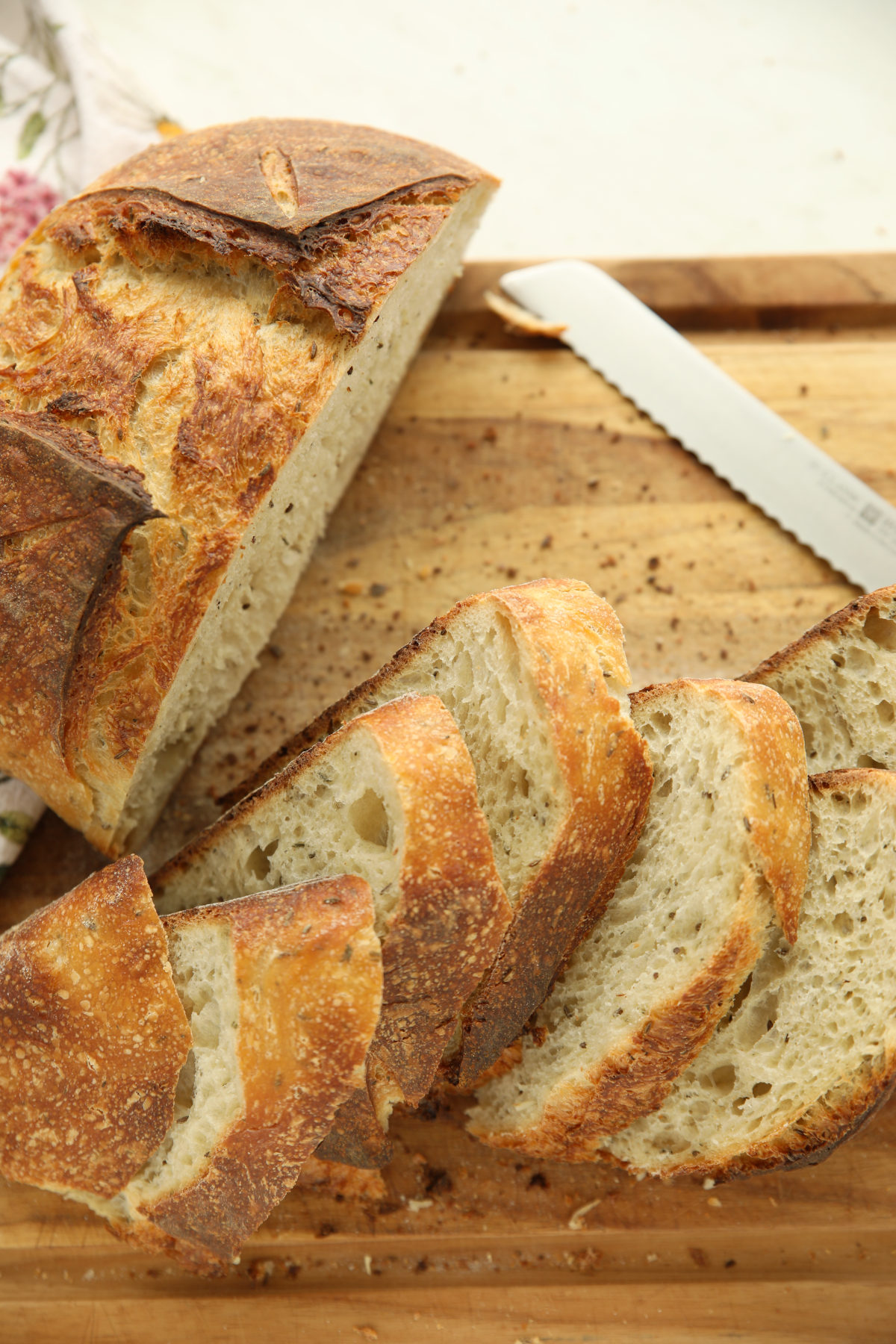
Soft, tangy, and studded with caraway and thyme, this vintage sourdough loaf is a beginner’s dream. Toast it thick with butter, or stack it high with corned beef for a deeply satisfying sandwich.

New to sourdough? Start Here! How To Feed Sourdough Starter Beginners Guide Easy Sourdough Bread Recipe for Beginners (Artisan Loaf)
My mom grew up with caraway bread and she never forgot. In the 1950s, her mother baked a simple herb bread from an old Joy of Cooking recipe and served it warm with butter. I remember that same bread from my own childhood too. My grandmother would make it every so often, and it’s stuck with both of us the same way, one of those flavors that just belongs to her kitchen.
Recipes like this get lost. Nobody wrote hers down anywhere permanent, and once she wasn’t around to ask, it would have disappeared for good. I didn’t want that to happen. So I brought her caraway bread into my sourdough kitchen and built it into the easiest inclusion loaf in this whole series.
Vintage Caraway Sourdough Bread
This loaf is about as simple as sourdough inclusions get. Caraway seeds and dried thyme go into the dough right at the start, no folding required, so if you’ve never worked with an inclusion loaf before, this is a genuinely great place to start. The caraway carries the whole loaf. Thyme just rounds out the edges.
Let it cool completely before slicing, like any sourdough. Once it has, it’s fantastic toasted with butter. It’s also, somewhat unexpectedly, one of the best breads you’ll ever put corned beef on.
A Vintage Flavor Worth Saving
Caraway used to show up in home kitchens far more often than it does now. It was a staple flavor a couple of generations back, the kind of thing grandmothers kept in her spice drawer without a second thought. Somewhere along the way it faded out of most home bakers’ rotations here in the US.
I like recipes that hang onto something worth keeping. This loaf isn’t trying to be trendy. It’s trying to bring a flavor forward that deserves another few decades in circulation, dressed up in a sourdough crust instead of the classic yeast loaf it came from.
What Is Caraway Seed?
Caraway seed comes from the caraway plant, a relative of parsley, and it has a distinctive, slightly sweet, anise-like flavor. It’s most familiar to people from rye bread, where it’s practically a signature ingredient, and it shows up occasionally in Irish soda bread too.
You’ll usually find it in the spice section of most grocery stores. If yours doesn’t carry it, or you’d rather skip the trip, grab some here.
How to Make This Bread
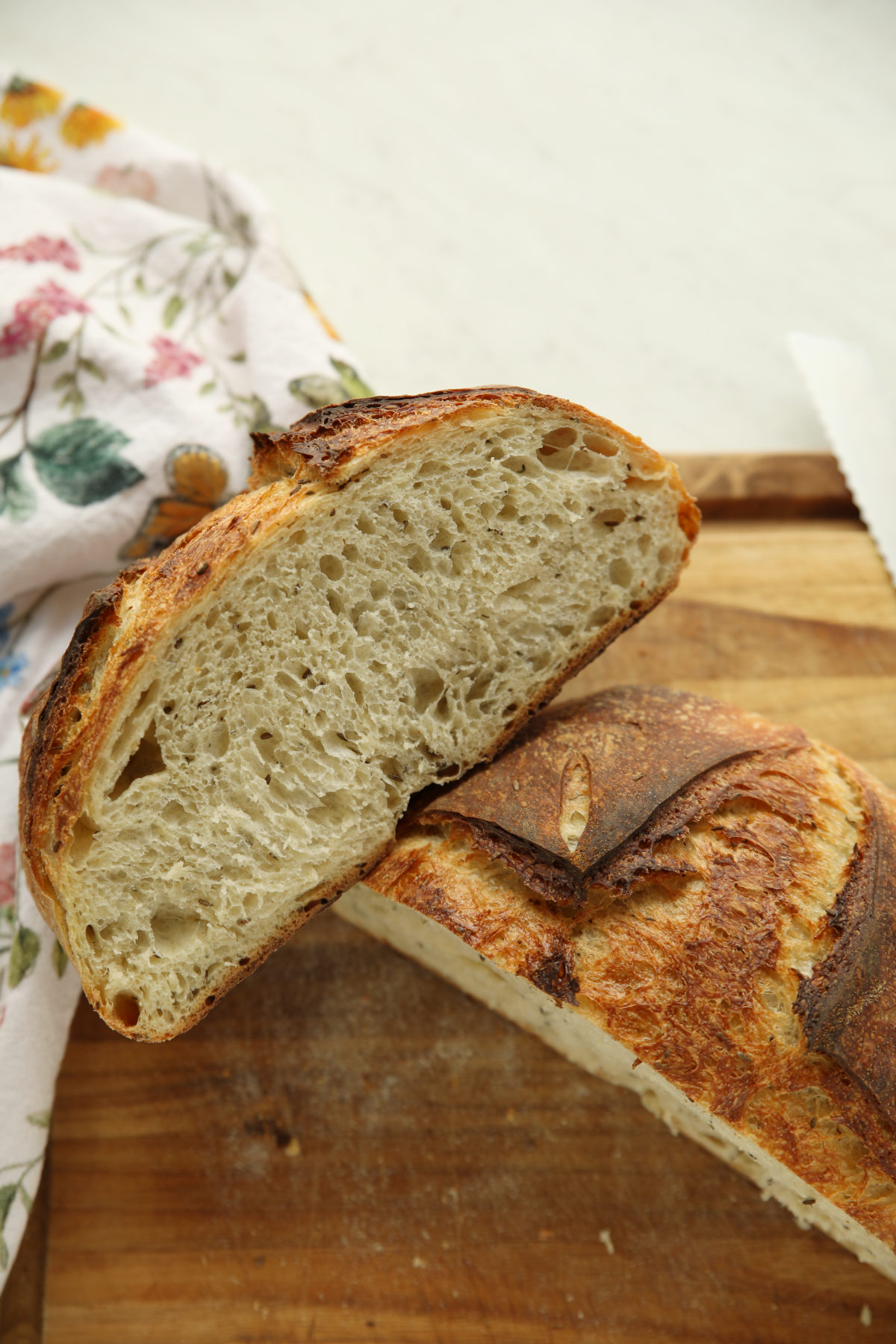
Like my chili crisp sourdough, both the caraway seeds and the dried thyme go straight into the dough at the very beginning, mixed in with your water, starter, flour, and salt. No stretch-and-fold timing to think about. Just mix, and the flavor is evenly distributed from the start.
From there, this bakes just like my other inclusion loaves. If you haven’t made one before, my Sourdough Inclusion Ideas guide walks through the basics of timing, technique, and what to expect.
More Sourdough Loaves to Try
- Jalapeño Cheddar Sourdough Bread
- Blueberry Sourdough Bread
- Chocolate Chip Sourdough Bread
- Chili Crisp Green Onion Sourdough
Vintage Caraway Sourdough Bread
Ingredients
- 350 g lukewarm water
- 20-25 g honey
- 100 g active sourdough starter fed and happy
- 500 g bread flour
- 13 g fine grain sea salt
- 1 Tablespoon caraway seeds
- 1 teaspoon dried thyme
Instructions
Autolyze – Mix and Rest:
- In a large mixing bowl, add the water, honey, starter, flour, salt, caraway seeds, and dried thyme. Mix with a dough whisk or wooden spoon until no dry bits remain, you're looking for a rough, shaggy dough, not a smooth one. That raggedy texture is exactly right at this stage. Cover and rest on the counter for 1 hour. This rest lets the flour fully hydrate and gluten start forming on its own, and it also means every bit of caraway and thyme is already evenly distributed before you've done any folding at all.
Stretch and Folds – Build the Structure:
- Get your hands wet so the dough doesn't stick to you. Grab one side of the dough, pull gently until it resists, then fold it back over itself. Rotate the bowl a quarter turn and repeat. Four stretch and folds makes one set. (Full stretch and fold video guide here.)
- Cover and rest 30 minutes, then repeat for a total of 4 sets over about 2 hours. There’s nothing to add during these folds this time. The caraway and thyme are already in.
Bulk Ferment:
- Cover and let the dough rise at room temperature for 5-8 hours. Watch for the same signs as always: it should double in size, look smooth and pillowy like a marshmallow, show bubbles through the sides of the bowl, and jiggle a little when you nudge it. Warmer kitchens move faster, cooler ones take longer. Let the dough tell you when it’s ready rather than the clock.
Shape:
- Turn the dough onto a counter misted very lightly with water and shape into a tight boule, building surface tension without deflating those hard-earned air bubbles. Place seam-side up in a rice-floured banneton.
Cold Retard:
- Cover and refrigerate overnight, 8-12 hours. This slow, cold rise builds deeper flavor and makes the dough much easier to score straight from the fridge.
Bake:
- Preheat your Dutch oven at 450°F for a full hour, don’t rush this part, a properly hot pot is what gives you that oven spring and crackly crust. Turn the cold dough out onto parchment, score it, mist very lightly with water, and lower it into the pot.
- 450°F, 30 minutes, lid on.
- At the 30-minute mark, carefully remove the lid.
- 410°F, 15 minutes, lid off, until deep golden.
Cool:
- Cool completely on a wire rack before slicing, 3-4 hours. Cutting in early releases steam and leaves you with a gummy crumb, so let it be.
Serving Suggestions:
- Sliced thick and toasted, this bread is fantastic with butter. It's also great layered with corned beef for a deeply satisfying sandwich.
Your Rating Matters
When you leave a comment or star rating, it means more than you might think. It helps me understand what you’re enjoying, builds trust for other readers, and supports real, tested cooking content. If you have a moment, I’d truly appreciate you sharing your experience. – Mirlandra
Nutrition Estimate
A Note on Nutrition
Nutritional info is an imperfect estimate. Please take it with a grain of salt.
New to sourdough? Start Here! How To Feed Sourdough Starter Beginners Guide Easy Sourdough Bread Recipe for Beginners (Artisan Loaf)
Leave a Reply