Marzipan should be one of the easiest things in your baking repertoire — no candy thermometer required. It’s sweet, smooth, and almond-rich, with a soft, pliable texture that’s just as satisfying to eat as it is to shape.
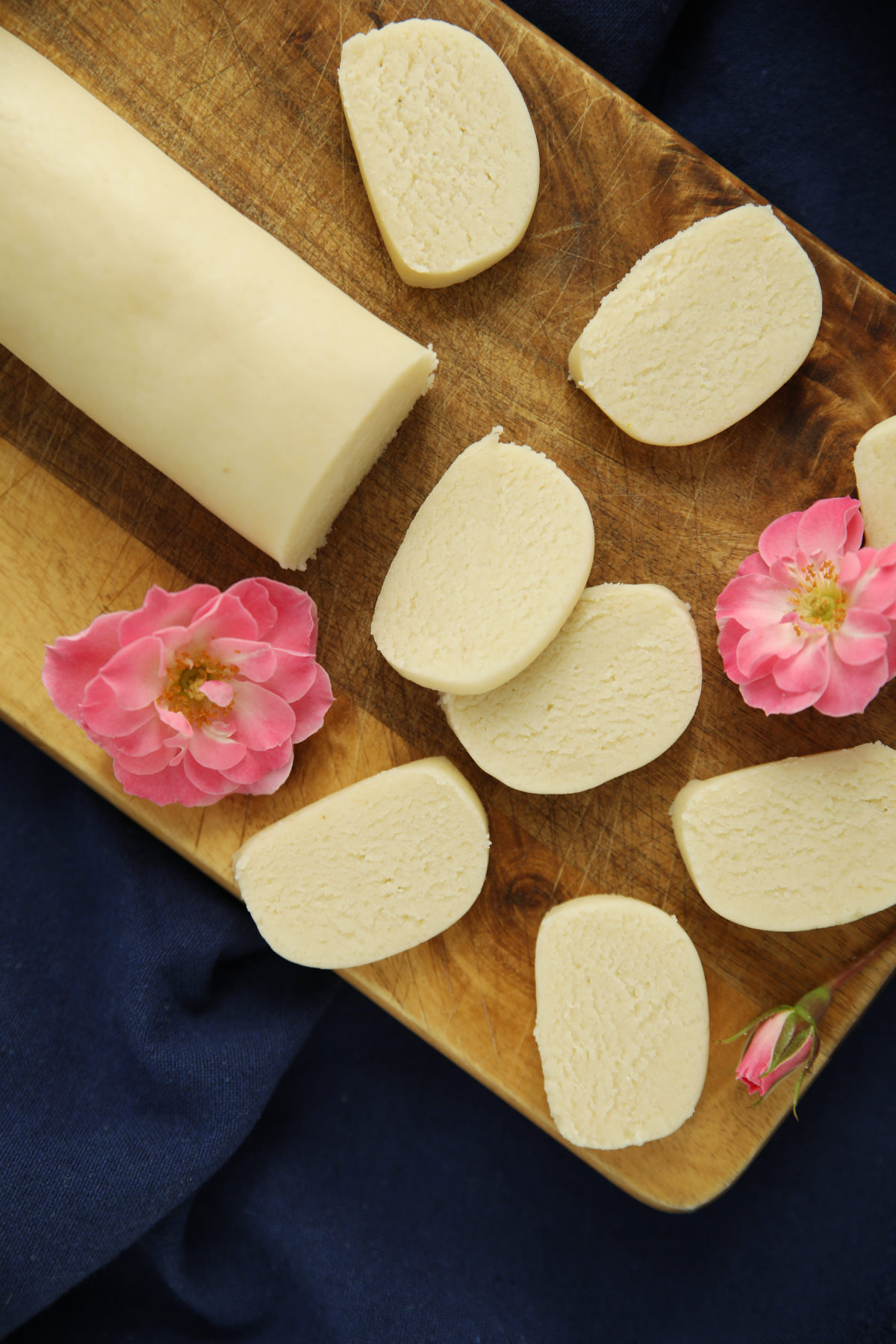
Marzipan has a reputation for being fussy. Many people buy it in a expensive little tube at the import store. But it’s genuinely one of the simplest things you can make at home: four ingredients, one food processor, and about five minutes of actual work. No candy thermometer, no fondant-level patience and no import level price tag!
A Marzipan Recipe Any Home Cook Can Make
What Is Marzipan?
Marzipan is a sweet, smooth paste made primarily from ground almonds and sugar. It’s prized for how pliable it is. You can roll it thin to cover a cake, knead it into little balls for candy, or shape it by hand into decorative fruits, animals, or holiday shapes. It’s a staple in European baking traditions, especially in Germany, where cities like Lübeck are famous for it, but it shows up in baking and candy-making all over the world.
I grew up in Oregon’s Willamette Valley in the 80s and would probably never have run into marzipan there. But my grandmother loved it. She often brought me little boxes of marzipan shaped into strawberries or baked me cookies made from marzipan. I was probably the only 10 year old in the valley that loved marzipan treats!
I always thought of marzipan as an expensive delicacy to be treasured but now I’ve learned to make my own with ease. It is higher quality, way cheaper, and so fast to toss together when I want to make my own marzipan cookies or slice some up for nibbles.
Marzipan vs. Almond Paste — What’s the Difference?
These two get mixed up constantly, but they are not the same thing. Almond paste is coarser in texture and much less sweet — it’s meant to be baked into things like Danish pastries, bear claws, or frangipane fillings, not eaten on its own or shaped by hand.
Marzipan has a higher sugar content and a much finer, smoother texture, which is exactly what makes it moldable and pliable enough for candy-making and cake decorating. Some traditional marzipan recipes actually start with almond paste and knead in extra sugar — but the two products behave very differently in the kitchen, so it’s worth knowing which one a recipe actually calls for.
What Is Marzipan Made Of?
At its core, marzipan is just ground almonds, sugar, and something to bind it together. Water, egg white, or a bit of corn syrup are all common binders. Finally a little almond extract gets added to pump up the flavor.
My recipe uses a classic confectioner’s-style ratio: roughly 2 parts sugar to 1 part almond flour by weight. That’s typical of American-style marzipan, and it results in something sweet, smooth, and very easy to work with. I skip the fussy egg white binder method and add extra almond flavoring because I like my marzipan to taste amazing!
For comparison, many European-style marzipans (like the famous Lübeck style) use closer to a 1:1 ratio of almonds to sugar. That version is less sweet and more nutty, but it’s also more prone to cracking and harder to handle. The 2:1 ratio in this recipe is the more forgiving place to start, especially the first time you make it.
How to Make Marzipan
The whole process happens in a food processor: the almond flour and powdered sugar get combined first, then the almond extract and water get added until everything comes together into a smooth, pliable ball. A quick knead by hand, a roll into a log, and it’s ready to chill. Five minutes to make marzipan? YES!
Tips for Perfect Marzipan
- Sift your powdered sugar if it is lumpy. Fresh powdered sugar is probably fine but if yours has been on the shelf for a hot minute putting it through a sieve to get the lumps out is wise. They can leave little white flecks in the finished marzipan.
- Pulse the dry ingredients first. Combining the almond flour and sugar before adding any liquid helps distribute the almond oils evenly for a smoother result.
- Add water slowly. You shouldn’t need to add additional water but if you do need to go slow. Marzipan can go from crumbly to sticky very fast, so add extra water a teaspoon at a time if needed, rather than all at once.
- Use finely ground, blanched almond flour. Coarser almond flour or meal will still work, but the texture will be a bit sandier rather than silky-smooth — and almond meal (which includes the skins) will give you a darker-colored marzipan. I just buy the almond flour at Costco. Any standard almond flour will work well for you!
- Soften with your hands if needed. Marzipan firms up quite a bit in the fridge. If it’s too stiff to work with, a few seconds of kneading with warm hands will soften it right back up. I usually leave my marzipan on the counter for a few hours before I use it. Depending on the recipe having it at room temperature is usually helpful.
How to Store Homemade Marzipan
Wrap it airtight in plastic wrap and store it in the refrigerator for up to 10 days, or in the freezer for up to 3 months. To thaw, leave it wrapped in the refrigerator overnight, or for at least 3 to 4 hours, before using.
Ways to Use Homemade Marzipan
I love nibbling slices of marzipan as a treat but there is so much more you can do with it! Roll it into simple candies, dip slices in chocolate, shape it into little decorative fruits, use it to fill pastries, use it in holiday breads, stuff it into a loaf of sourdough, or roll it thin to cover a cake. Marzipan cookies are one of my favorite treats to make.
Frequently Asked Questions
Is marzipan the same as almond paste? No — they’re related, but not interchangeable. Almond paste is coarser and less sweet, and it’s meant to be baked into things like pastries. Marzipan is sweeter, smoother, and pliable enough to shape or mold by hand.
Can I use almond meal instead of almond flour? Yes. Almond meal (which includes the skins) works well, but the marzipan will be a darker color than if you use finely ground, blanched almond flour.
Does this marzipan recipe contain eggs? No. This version is bound with water rather than egg white, so it works well for anyone avoiding eggs.
Can you eat marzipan without baking it? Yes. Marzipan isn’t baked — it’s ready to eat as soon as it’s made, so it’s safe to shape, snack on, or use straight from the fridge.
How long does homemade marzipan last? Up to 10 days in the refrigerator, or up to 3 months in the freezer, as long as it’s wrapped airtight.
Easy Homemade Marzipan Recipe
Ingredients
- 1 cup almond flour see note
- 2 cups powdered sugar
- 1 teaspoon almond extract
- 2 Tablespoons water
Instructions
- Recipe note: For best results, use finely ground blanched almond flour. Almond meal (which includes the skin) works too, but will give a darker color.
- Add the almond flour and powdered sugar to a food processor. Process about 1 minute until fully combined, scraping down the sides once.
- Add the almond extract and water. Process 1 to 2 minutes, until the mixture comes together into a smooth ball.
- If the mixture is still too dry after 2 minutes, add extra water 1 teaspoon at a time, processing for a minute after each addition. It should form a thick paste, similar to fondant or playdough.
- Turn the marzipan out onto a clean surface, using a spatula to scrape up any bits left under the blades. Knead by hand for about 30 seconds, just until smooth and evenly combined.
- Roll into a log, wrap tightly in plastic wrap, and refrigerate until ready to use. It will firm up slightly as it chills.
Helpful Recipe Notes
Your Rating Matters
When you leave a comment or star rating, it means more than you might think. It helps me understand what you’re enjoying, builds trust for other readers, and supports real, tested cooking content. If you have a moment, I’d truly appreciate you sharing your experience. – Mirlandra
Nutrition Estimate
A Note on Nutrition
Nutritional info is an imperfect estimate. Please take it with a grain of salt.
Patty says
Who knew making marzipan at home was so incredibly easy!!! Thank you for posting this recipe. I made it and it is truly delicious.
Mirlandra Neuneker says
Oh this makes me so happy! I love marzipan and always thought it was really hard to do so when I figured out there was a simple way to make it I was in heaven. I’m absolutely making this at Christmas and dipping slices in chocolate for a treat!