This chewy snickerdoodle recipe makes soft, buttery cookies with crackly tops and a decadent coat of cinnamon sugar. It’s made with all butter and no shortening, and it uses a lot more cinnamon than most recipes. The details matter to get the best version of a classic cookie like this. I’ll walk you through each one.
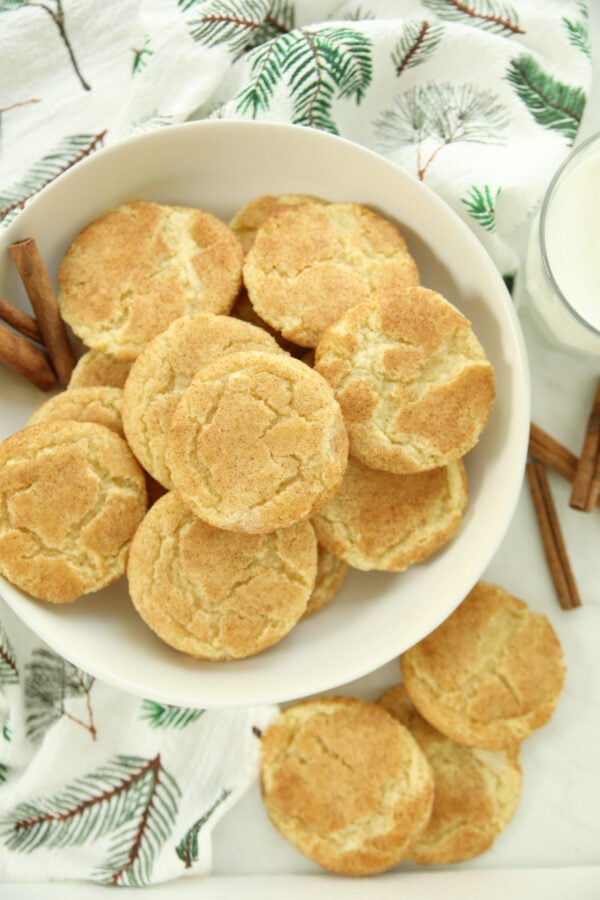
Snickerdoodles are at the top of my kids’ cookie list, and that’s thanks to their Uncle Curtis. He’s one of those adults who is a ridiculous amount of fun. When Jon and I went out on date nights, Curtis would come watch the kids. (Free babysitting!) More than once, we came home to snickerdoodles.
The whole kitchen would be covered. Cinnamon sugar was everywhere, with the stand mixer out and cookie sheets on every counter. It looked like a bomb went off, and the kids were so happy.
One night I walked in to find Curtis and Jack baking together. Jack was little, and he was wearing a white shirt with a lion on it. (His middle name is Lionheart.) I didn’t put him in that white shirt very often, and now I remember why. It was brown with cinnamon! The mom in me thought, “That kitchen is never going to be the same.”
So I cleaned the kitchen, and we all ate cookies. Snickerdoodles are still one of Curtis’s favorites, too.
What Makes This Chewy Snickerdoodle Recipe Work
These are simple cookies. You cream the dough, chill it, roll it in cinnamon sugar and bake. What makes them special is a handful of small details: real butter, plenty of cinnamon, cold dough and pulling them from the oven at just the right time.
What Is a Snickerdoodle?
A snickerdoodle is a soft, buttery cookie that’s rolled in cinnamon sugar before baking. It looks a lot like a sugar cookie. The difference is cream of tartar.
Cream of tartar is a powdered acid that you’ll find in the spice aisle. It reacts with the baking soda to puff the cookies up as they bake. It also gives snickerdoodles their soft, chewy texture and a subtle tang. That little bit of tang is what sets a snickerdoodle apart from a sugar cookie.
Nobody knows for sure where the funny name came from. The Oxford English Dictionary’s oldest example of the word is from 1889, and printed snickerdoodle recipes show up in the 1890s. Some think it started as a whimsical made-up name. Others think it comes from a German cinnamon pastry called schneckennudeln. Either way, it’s a great cookie!
Why I Use All Butter
Shortening has been in American kitchens since Crisco came out in 1911. By the 1950s, it was in many of the cookbooks and classic recipes we still bake from today. That’s why so many snickerdoodle recipes call for shortening, or a mix of butter and shortening. But you don’t need it to make a soft, chewy snickerdoodle. This is my all-butter version, and snickerdoodles with butter have a rich flavor that shortening can’t match.
We make these often at our house, and real butter is what I’d rather bake with for my family. Everybody does their own thing, and that’s fine! But if you’d like a snickerdoodle recipe without shortening, this is the one.
Butter softens at a lower temperature than shortening, so this dough needs a good chill. I’ll show you how in the tips below.
Why So Much Cinnamon?
Curtis’s family taught me this one. Many snickerdoodle recipes use just a teaspoon or two of cinnamon in the rolling sugar. I use 2 full Tablespoons with ½ cup of sugar.
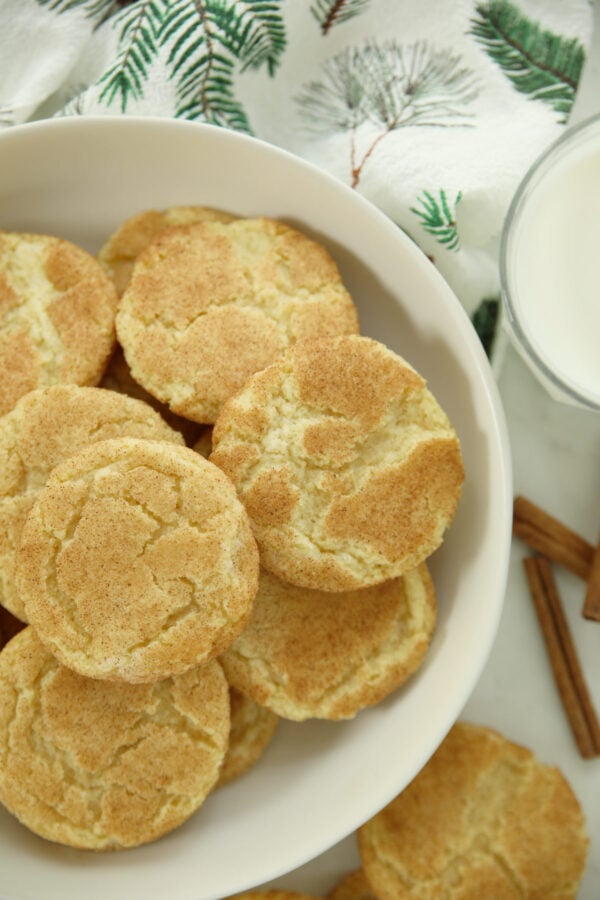
It makes sense when you think about it. A hint of cinnamon is nice, but a little cinnamon is never enough! The extra cinnamon gives every bite a warm, cozy flavor, and it bakes into a crackly, golden coating.
Tips for Soft, Chewy Snickerdoodles
- Measure the flour carefully. Spoon it into the measuring cup and level it off. Too much flour makes dry, cakey cookies.
- Chill the dough flat. Press the dough into a disc about 2 inches thick, wrap it in plastic wrap and chill it until it’s completely cold. That takes a few hours, or you can leave it overnight. A flat disc chills faster than a big ball.
- Keep the dough cold. Cold dough is the secret to cookies that don’t spread. Between batches, put the dough back in the fridge. If you double the recipe, plan on a longer chill so the dough is cold all the way through.
- Use a size 50 cookie scoop. That’s one size smaller than a standard medium scoop, and it makes a ball about 1.6 inches across. These are regular-size cookies with a soft, chewy middle. (The super-thick snickerdoodles you see online are usually huge, bakery-size cookies.)
- Coat them well. Roll each ball in the cinnamon sugar until it’s fully coated and no more will stick. A small, shallow bowl makes this easier.
- Don’t overbake them. Bake them for 10 to 11 minutes. Let them sit on the pan for a few minutes until they’re set and cool enough to move to a wire rack.
- If your cookies spread flat: The dough probably wasn’t cold enough. Old cream of tartar or baking soda can also cause flat cookies, so check the dates on yours.
Make Ahead and Storage
To freeze the dough: Scoop the dough into balls and roll them in the cinnamon sugar. Freeze them on a baking sheet until solid, then move them to a freezer bag. Bake them straight from the freezer, adding a minute or two to the bake time.
To freeze baked cookies: These cookies freeze well! Let them cool completely, then freeze them in an airtight container or freezer bag. Thaw them at room temperature.
To store: Keep cooled cookies in an airtight container at room temperature for up to a week. They’re best in the first few days.
Snickerdoodle FAQ
Can I make snickerdoodles without cream of tartar?
No. Cream of tartar is the ingredient that makes a snickerdoodle a snickerdoodle. Without it, you’d have a cinnamon sugar cookie. It gives these cookies their chewy texture and their signature tang, so don’t skip it.
Do I have to chill the dough?
Yes. Because this recipe uses all butter, the dough needs to be completely cold before it goes in the oven. Warm dough spreads and makes thin cookies.
Can I double this recipe?
Yes! A bigger batch of dough takes longer to chill, so give it extra time in the fridge. Splitting the dough into two flat discs helps it chill faster.
Will this recipe work at high altitude?
I live in Boise, which is a little higher up, and this is exactly how I make them. If you live much higher and your cookies spread, try adding a couple of Tablespoons of flour.
Snickerdoodles are a classic for a reason. They’re soft, chewy and full of cinnamon, and they’re just as fun to make with kids as they are to eat. Just maybe skip the white shirt!
More Cookie Recipes to Love
- Peanut Butter Blossoms
- Extra Zesty Lemon Sugar Cookies
- No Chill Cinnamon Roll Sugar Cookies
- Soft Cut Out Sugar Cookies (Easy No Chill Recipe)
Chewy Snickerdoodles
Ingredients
For the Cookie Dough
- 1 cup salted butter softened
- 1½ cups granulated sugar
- 1 large egg
- 1 egg yolk from a large egg
- 1 Tablespoon vanilla extract
- 2¾ cups all-purpose flour spooned and leveled
- 2 teaspoons cream of tartar
- 1 teaspoon baking soda
- ¼ teaspoon salt
For the Cinnamon Sugar
- ½ cup granulated sugar for rolling
- 2 Tablespoons ground cinnamon
Instructions
To Make the Dough
- In a stand mixer, or in a large bowl with a hand mixer, cream the 1 cup salted butter and 1½ cups granulated sugar until light and fluffy, 1 to 2 minutes.
- Add the 1 large egg, 1 egg yolk and 1 Tablespoon vanilla extract. Beat until well mixed.
- Add the 2¾ cups all-purpose flour, 2 teaspoons cream of tartar, 1 teaspoon baking soda and ¼ teaspoon salt. Beat on low speed until all the dry ingredients are fully mixed in.
- Press the dough into a disc about 2 inches thick on a plate. Wrap it tightly in plastic wrap and chill until fully cold, several hours or overnight. A doubled batch needs a longer chill.
To Bake the Cookies
- Preheat the oven to 375°F.
- In a small, shallow bowl, stir together the ½ cup granulated sugar and 2 Tablespoons ground cinnamon.
- Use a size 50 cookie scoop to form balls of dough, about 1.6 inches across. Roll each ball in the cinnamon sugar until it is fully coated and no more will stick.
- Place 12 dough balls on an ungreased cookie sheet. Keep the rest of the dough in the fridge between batches.
- Bake for 10 to 11 minutes. Let the cookies sit on the pan for a few minutes until set, then move them to a wire rack to cool completely.
Helpful Recipe Notes
Your Rating Matters
When you leave a comment or star rating, it means more than you might think. It helps me understand what you’re enjoying, builds trust for other readers, and supports real, tested cooking content. If you have a moment, I’d truly appreciate you sharing your experience. - Mirlandra
Nutrition Estimate
A Note on Nutrition
Nutritional info is an imperfect estimate. Please take it with a grain of salt.
Leave a Reply